
If you want to teach a child how to tie their shoelaces, you would usually demonstrate the process first and then let them imitate it.
Robots can learn in a surprisingly similar way.
Instead of writing thousands of lines of code to define every movement, we can let robots observe or record many successful examples and then use that data for training.
This is one of the key ideas behind Imitation Learning – learning by demonstration.
Teaching Robots by Demonstration
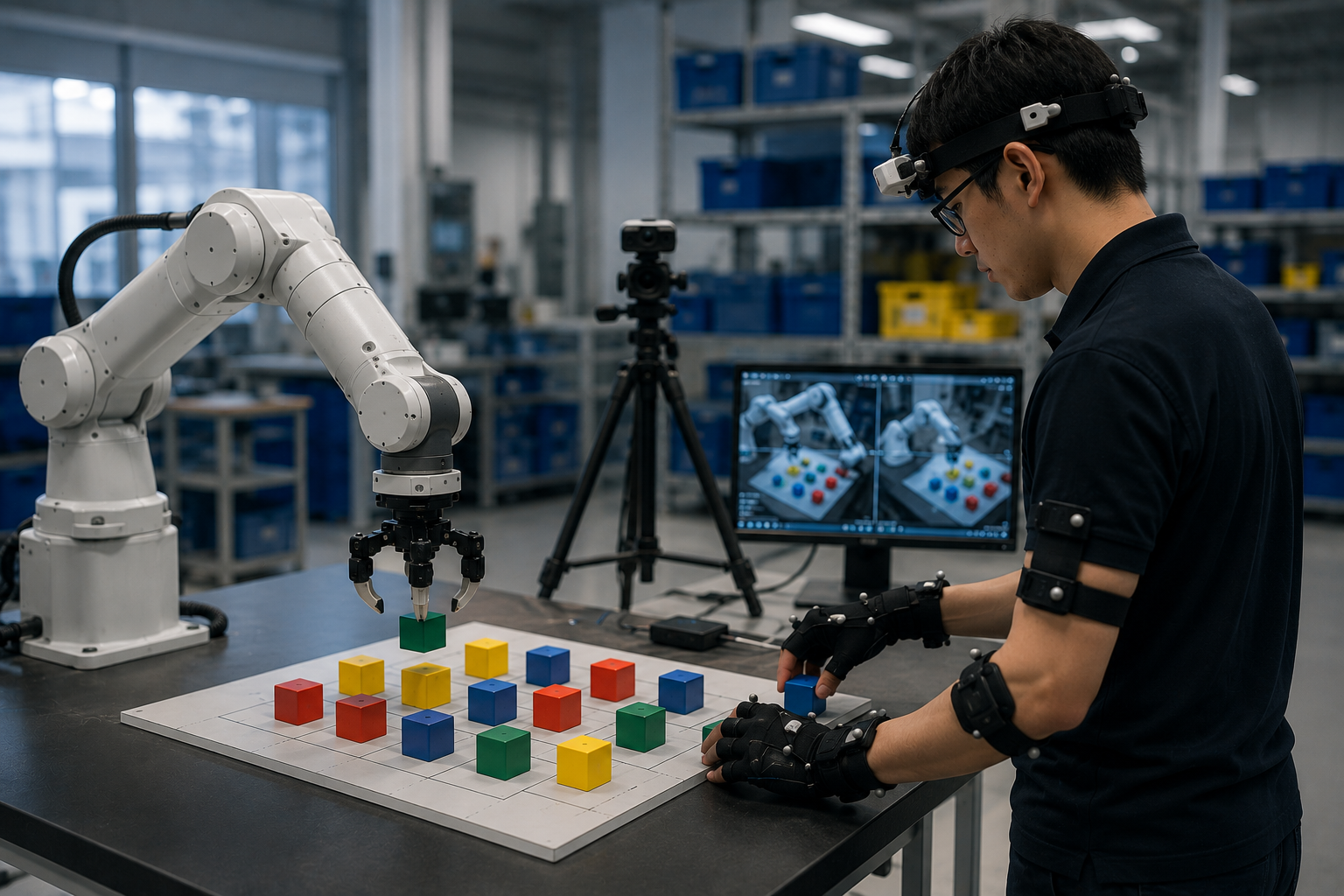
Suppose we want a robot to learn how to pick up an apple and place it into a basket.
A human operator can control the robot and perform the task repeatedly.
The camera records what the robot sees.
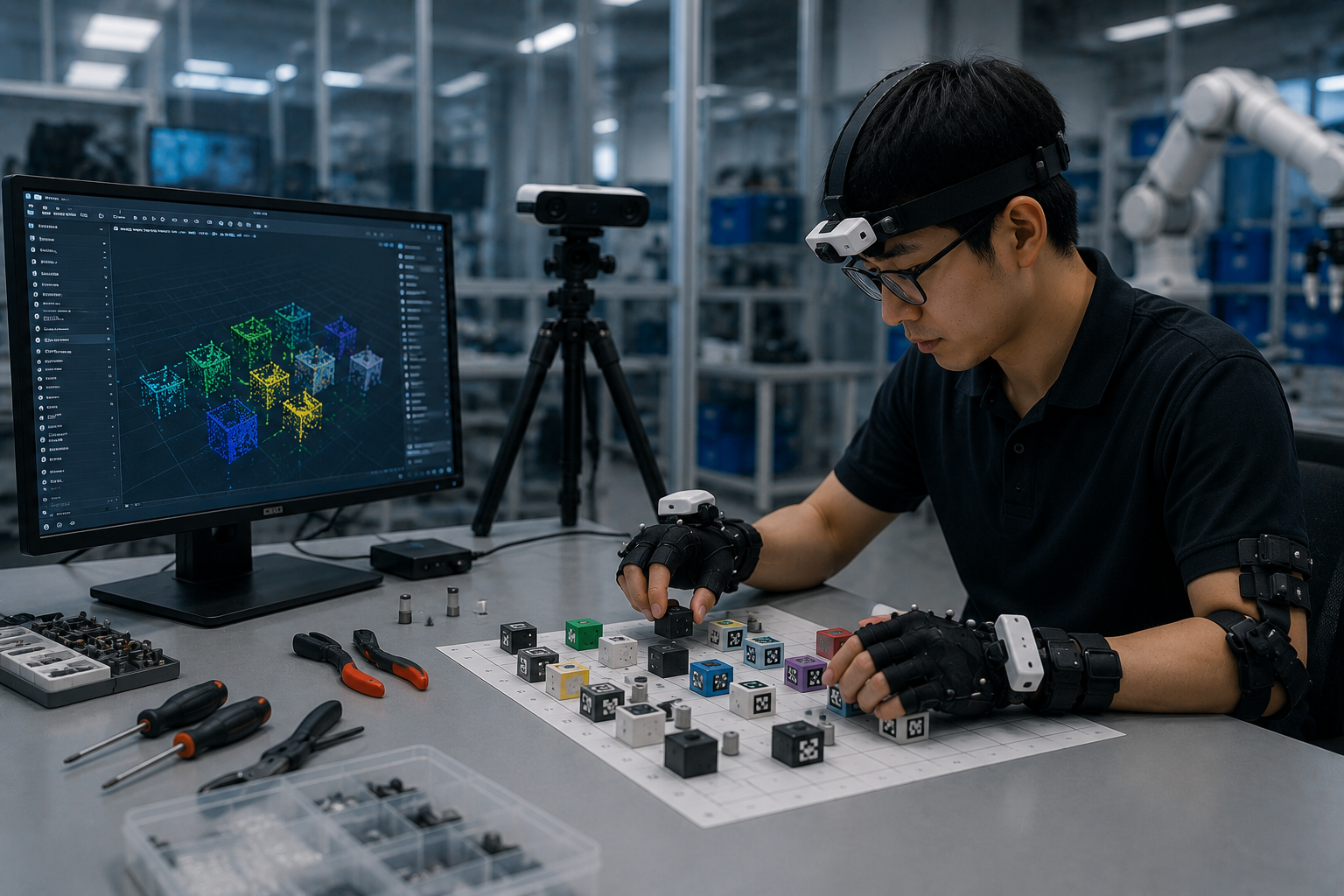
At the same time, the system may also record:
- the positions of the robot’s joints;
- the direction of movement;
- the open/closed state of the gripper;
- the timing of each action.
The process in which a human directly controls a robot remotely is commonly known as Teleoperation.
The result is a set of paired data:
What the robot sees → What the human operator makes the robot do.
By learning from many examples like these, the model can begin predicting appropriate actions when it encounters new situations. Demonstration data collected from real robots or through teleoperation has become an important part of many modern robot training workflows.
Human Operator → Robot → Camera + Sensor → Dataset → Training → Robot Policy
There is an important term here: Policy.
In simple terms, a policy describes how a robot decides what action to take.
Input: What is the robot seeing?
Output: What should the robot do next?
When Robots Begin to Understand Both Vision and Language
One emerging direction in robotics is VLA – Vision-Language-Action.
The name may sound technical, but the idea is relatively straightforward:
Vision – perceive images.
Language – understand instructions expressed in natural language.
Action – generate actions.
For example, a person might say:
“Pick up the blue bottle and place it in the box on the right.”
The robot must understand the instruction, identify the correct bottle in the visual scene, and then generate a sequence of actions to complete the task.
That is how the three components – Vision, Language, and Action – are connected. A growing area of robotics research is focused on combining perception, reasoning, and action in this way.
Robots Cannot Learn Everything by Trial and Error in the Real World
There is a very practical challenge.
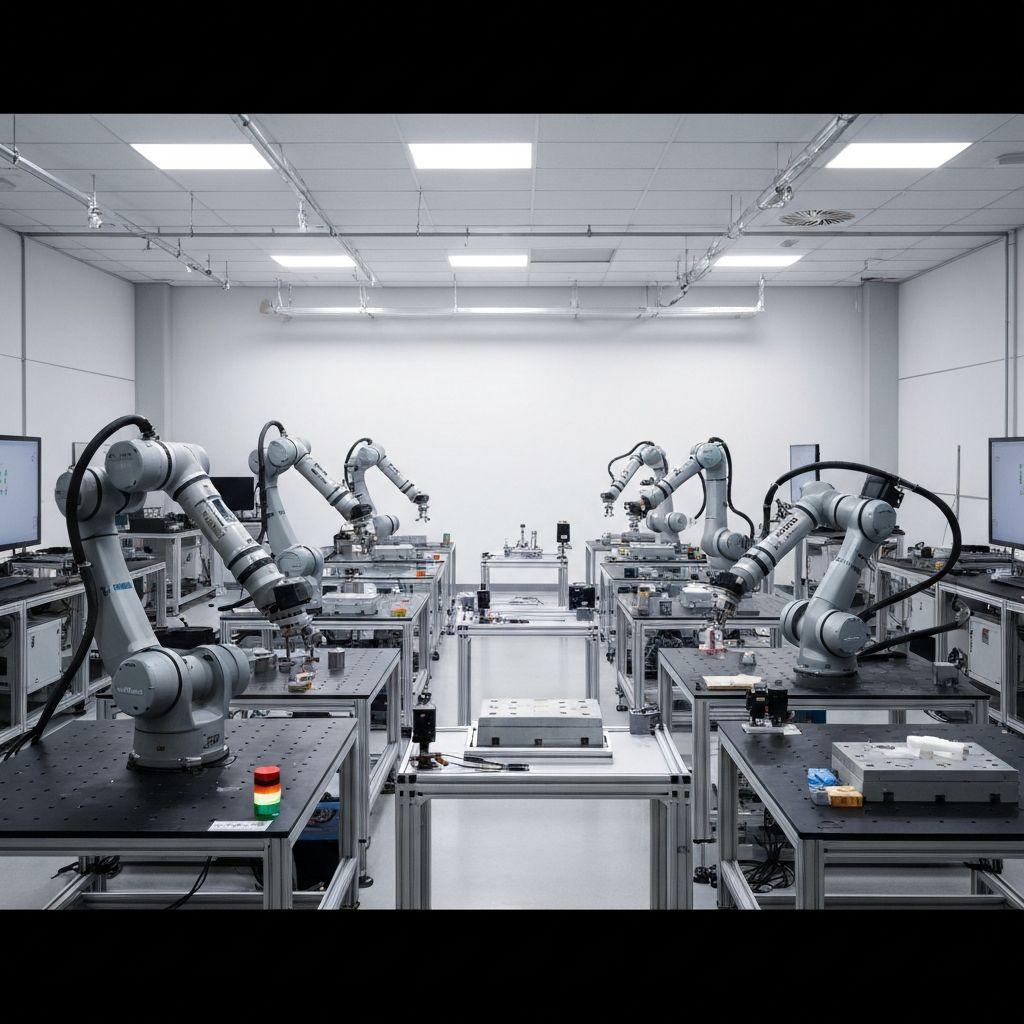
Collecting data using real robots takes time. Robots can be damaged. Objects must often be reset after each attempt. Some situations are also too risky to repeat thousands of times in the physical world.
That is why robotics makes extensive use of Simulation – simulated environments.
You can think of simulation as a kind of “virtual world for robots.”
Inside it, we can create robots, tables, boxes, objects, cameras, lighting conditions, and physical rules.
A robot can attempt the same action thousands of times without damaging a real machine.
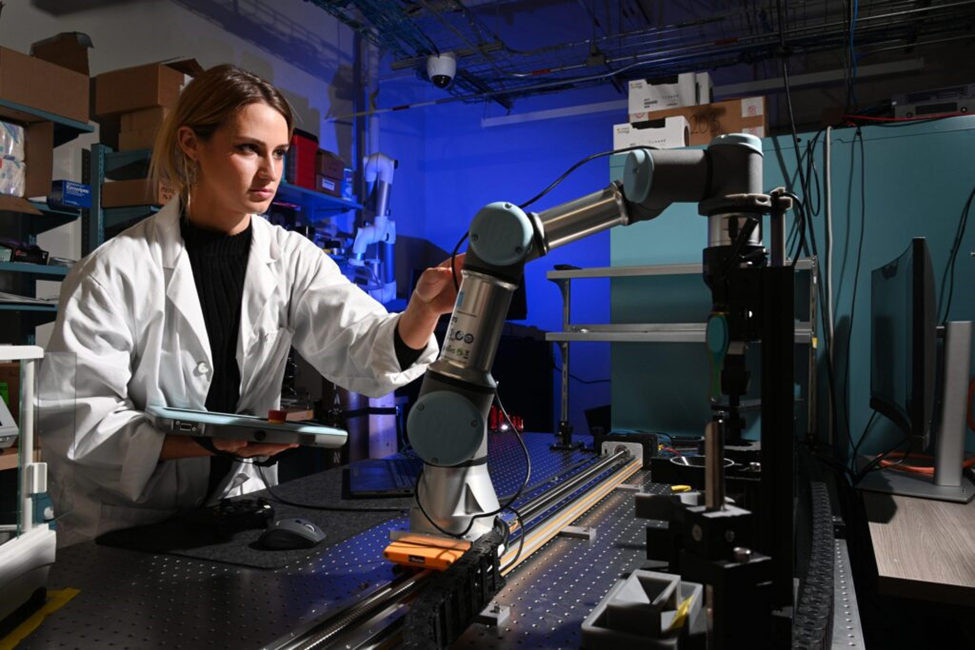
REAL WORLD → DATA → SIMULATION → TRAINING → REAL ROBOT
But simulation can never reproduce the real world with 100% accuracy.
The difference between these two environments is known as the Sim-to-Real Gap.
One technique commonly used to reduce this gap is Domain Randomization.
Instead of creating one perfectly consistent simulated room, the system intentionally varies elements such as lighting, colors, object positions, camera angles, and certain physical properties.
As a result, the robot must learn to perform under many different conditions rather than simply “memorizing” a single environment. This is one of the techniques used to help policies trained in simulation transfer more effectively to real robots.
Real Data and Simulated Data Will Work Together
An increasingly important approach is to combine:
Real Data + Synthetic Data + Simulation.
Real Data is collected from the physical world.
Synthetic Data is generated by computers or generative models.
Simulation provides an environment where robots can experiment, train, and learn at scale.
Modern Physical AI workflows increasingly bring these components together to generate data, train and evaluate models, and transfer policies from virtual environments to real robots.
So when we see a robot successfully complete an action in just a few seconds, what we are seeing is actually only the final stage of a much longer process:
Data Collection → Training → Simulation → Testing → Evaluation → Real Robot.
A robot does not become more intelligent simply because its AI model is larger.
It also needs better data, more experience, and a reliable process for turning what it learns in a computer into something that actually works in the real world.